

The Subjectivity of Art and Style
As an artist, I’m often asked what my “style” is. In all honesty, I have real trouble answering this question. It’s not that I don’t like answering it or anything, just that answering it always feels a bit pretentious to me and, dare I say it, overly complicated. Why pretentious? Well, I’ve never been into any of the more haughty aspects of the art world.
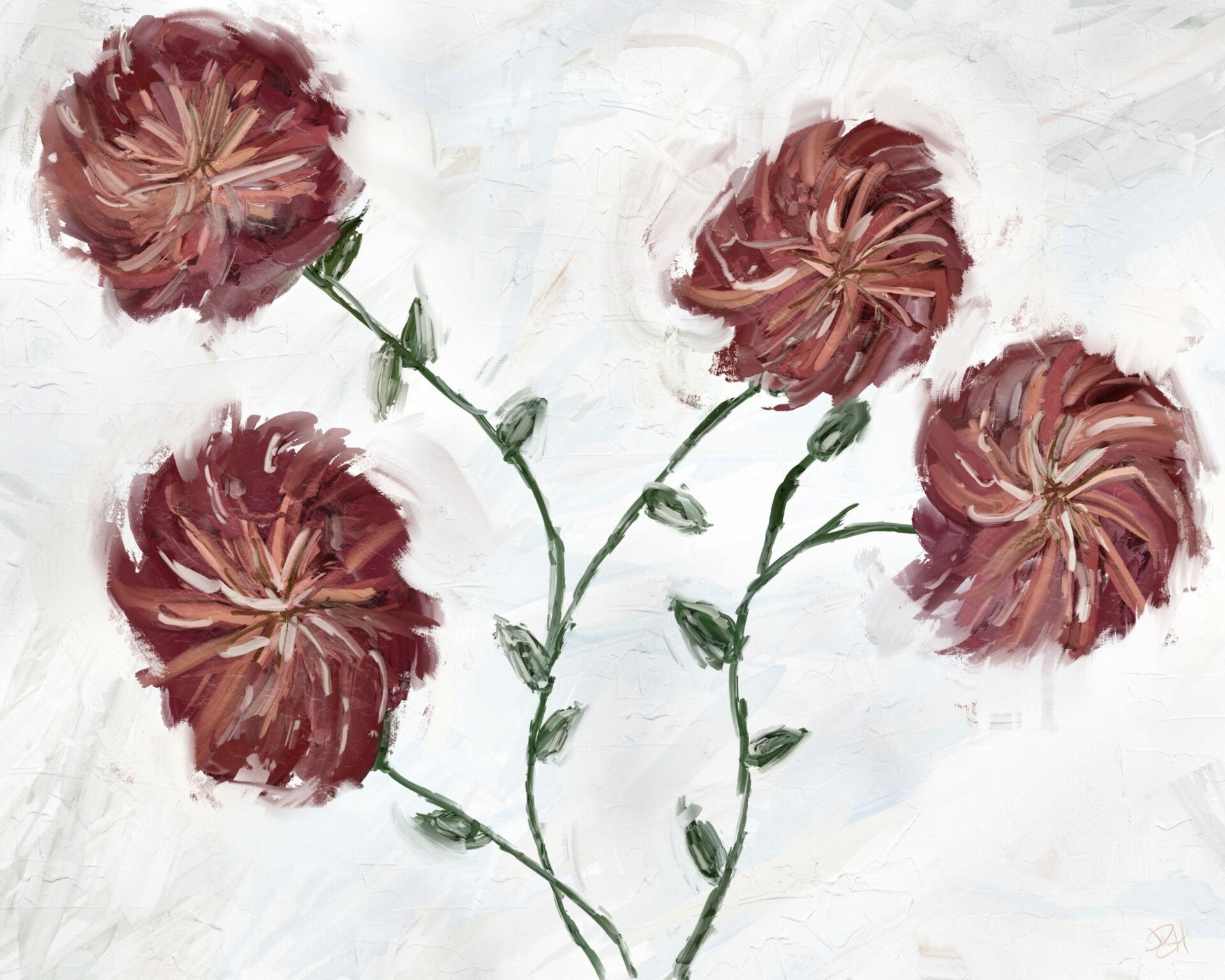
Standing around discussing, for instance, the juxtaposition of an artist’s choices has never appealed. Quite frankly I’ve never really ‘got’ it, and I find it all rather dull. Consequently, I’m careful not to start down that path when describing my work. Art is much more personal and reflective for me, and I’ve never felt the need to discuss it in a committee. I like and enjoy certain pieces, and I don’t like (but still respect) others. Furthermore, what I like might not be what you like and that’s fine. That’s art. Be it music, painting, sculpture, or photography, subjectivity has always been at the heart of art. All art should speak to your personal preferences, feelings, and experiences. Enjoy it for what it means to you, not for what someone ‘in the know’ tells you it should mean.
Another reason why I find answering the style question difficult is that I’ve always felt that my style is quite transient and, as a result of this, I’m conscious of not wanting to pigeonhole myself.
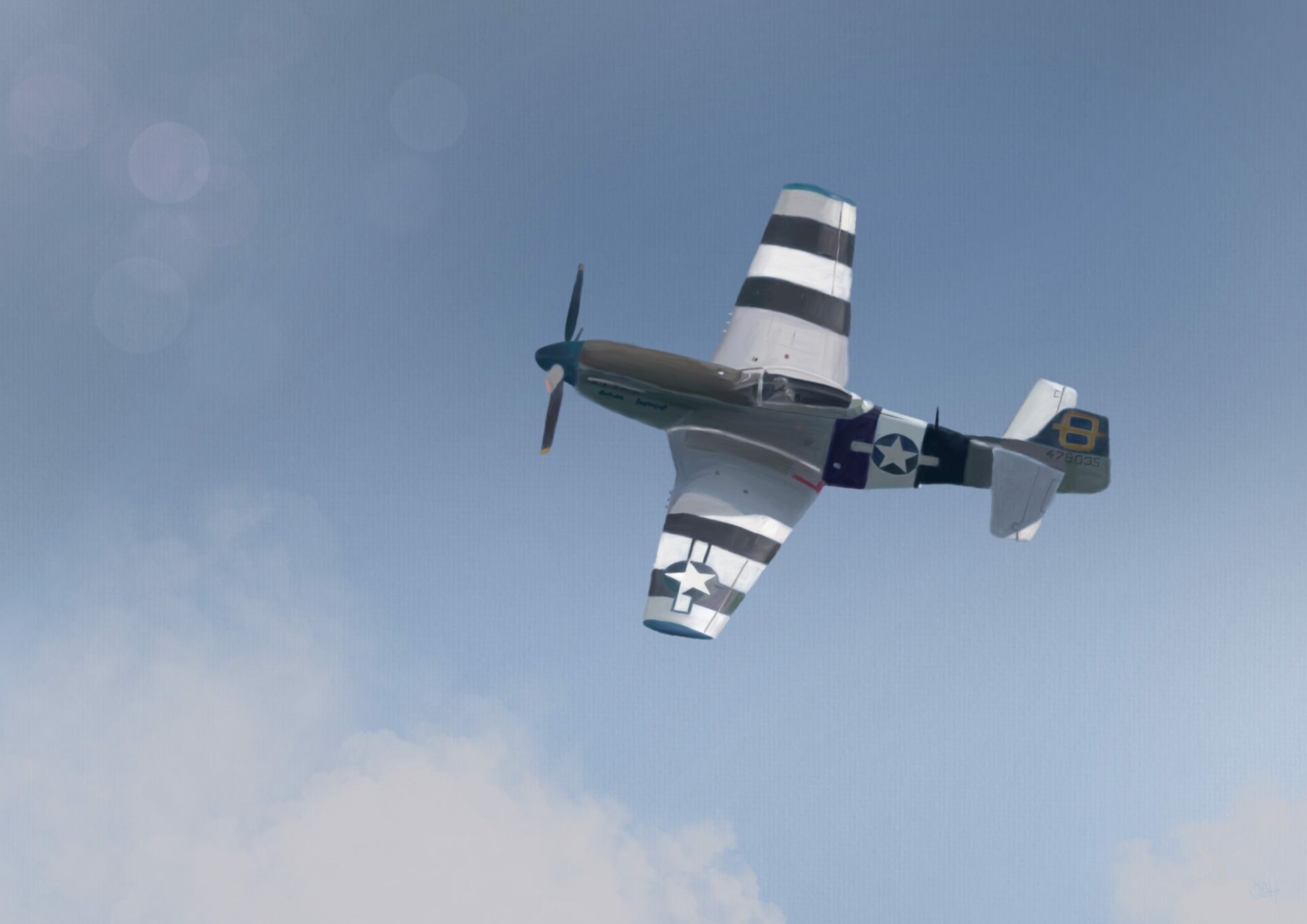
This is partly due to my development as an artist. I’m always learning, mostly from my own mistakes and discoveries, and my ‘style’ progresses and adapts accordingly. Then there’s my method or, to put it another way, my approach to each painting. One benefit of being a digital artist is the infinite creative variety it gives you. Knowing this, I will take a look in my mind’s eye at what I ultimately want to achieve, and have a think about what might work best. Should I go with oils, for example, or would watercolours or acrylics be better? Then there are the dimensions, background, and even textural choices such as paper to consider. Another benefit of painting digitally is that if I pick a particular path but, for whatever reason, I’m just not ‘feeling’ it once I’ve started, I can switch and try something else.
Nothing is ever set in stone, and neither is my style.
I certainly have preferences though and I normally keep things pretty loose. By that, I mean that I tend to favour a more ‘painterly’ style, rather than try and capture every line and detail. There are exceptions though, such as my painting of the Seven Sisters where the buildings needed line and precision to work in that painting. My point is that while I do have leanings toward a certain style, I will always paint in a way that I think works best for that particular piece of work.
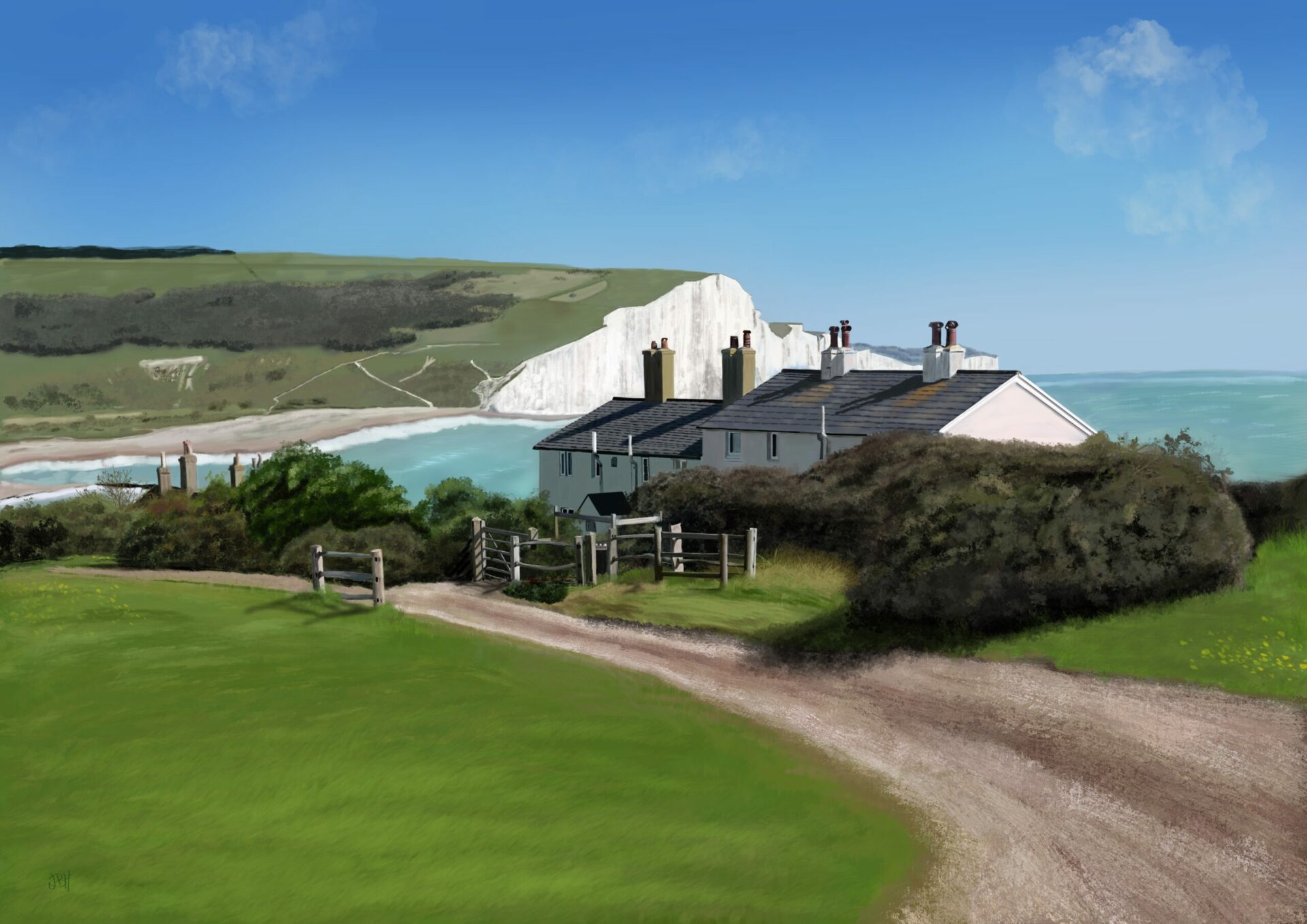
That subjectivity I mentioned earlier works both ways and influences the artist just as much as the viewer, if not more so. The way I choose to paint a particular scene or subject is entirely dictated by my personal feelings, preferences, and experiences. Taking my Seven Sisters painting as an example again, I deliberately spent hours capturing as much detail as I possibly could. My memories of this place stretch back to childhood and it’s one of my favourite places to be, so I wanted to spend the time to do it justice. Well, as much justice as my moderate level of ability would allow anyway.
When it comes to my pet portraits I’m less concerned about the details. I generally don’t faithfully paint every single strand of fur or, say, every wrinkle or pore in the nose.
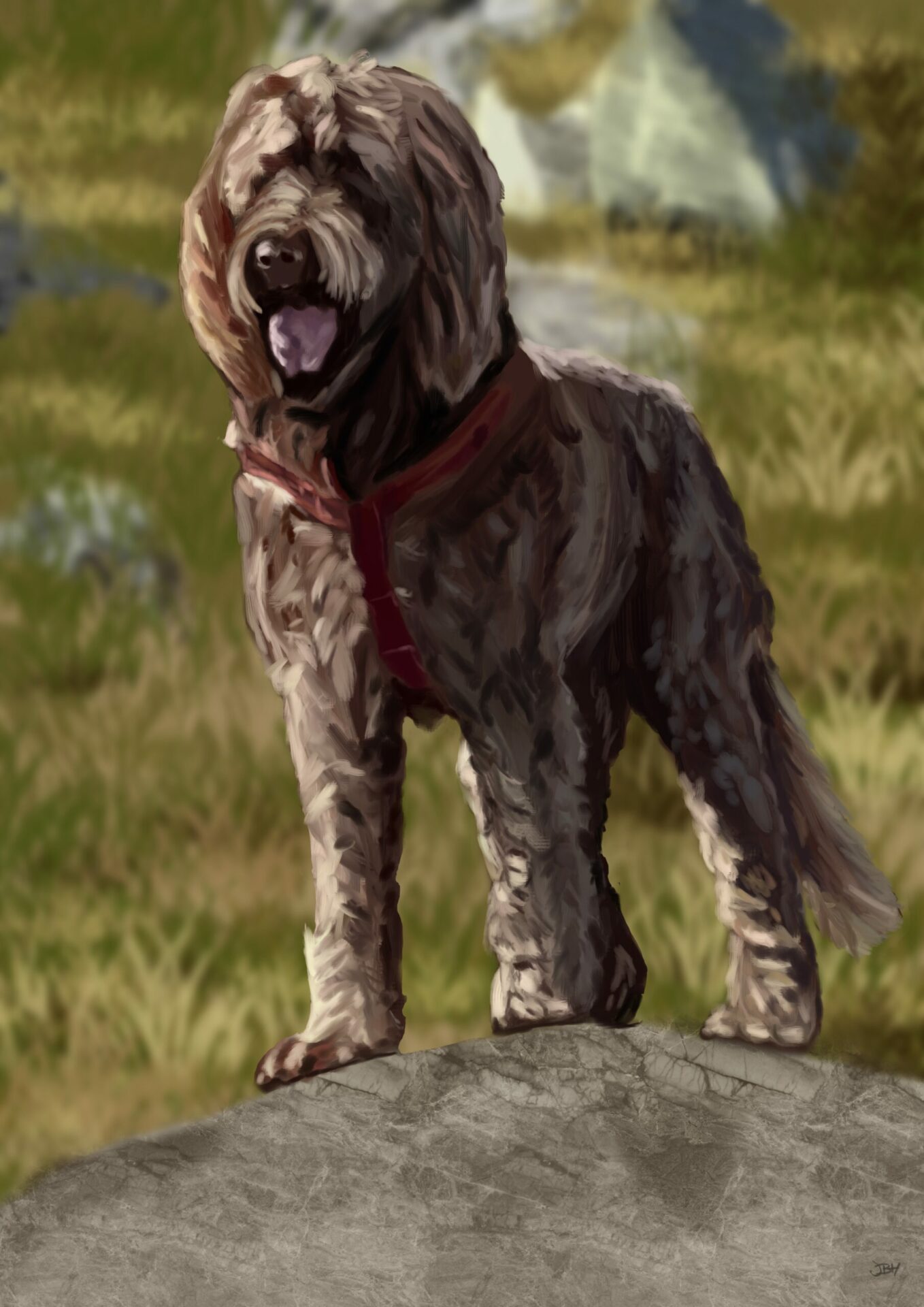
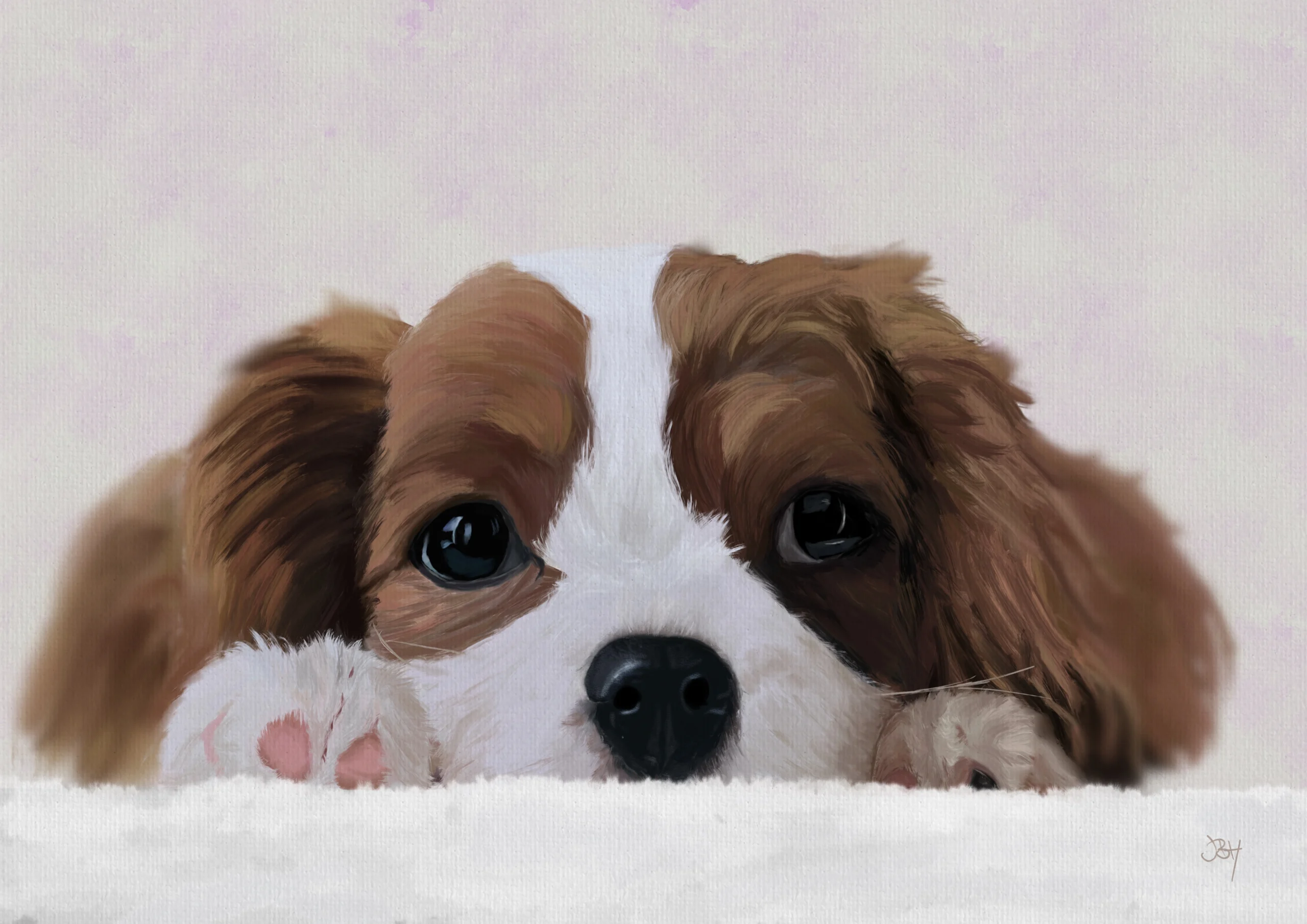
It’s much more important for me to capture the character and essence of the animal and allow them to shine through. It’s a case of being able to see the forest through the trees I suppose. That said, the amount of detail I can recreate is, more often than not, governed by the quality of the photos I receive from the pet’s owner. Take this portrait of Frankie as a perfect case in point. I was given a very low-resolution photo, most likely grabbed from social media. To make matters worse, Frankie was very small within the frame and the photo mainly consisted of his surroundings. Therefore, as I didn’t have very much to work from, I decided to embrace it and went with an extremely loose painting with minimal brushstrokes that captured his texture and colouring and, I feel, cheeky character. This limitation both dictated and informed my painting style in that it was necessary for this particular painting, but also made me realise that capturing every detail wasn’t always the way to go.
This goes back to my opinion that my style is transient. My whole preconceived idea of a need for detail stems from my background in photography. It took me quite a while to switch off from my desire to create paintings with photoreal detail and accept that I was, after all, creating a painting. This, in turn, led to my desire to be more painterly in style, almost as a rebellion against my previously favoured genre. Perhaps transient isn’t the best word. There’s absolutely nothing wrong with creating a ‘photoreal’ painting, it’s something I enjoy, and it’s not like I’ll never go back to painting highly detailed works. Perhaps eclectic would be better? Or is that my fear of pigeonholing coming to the fore again!?
At the end of the day, irrespective of what I think my style might be, I paint what I like and what I see in my head. Like any artist, I just hope that you’re able to find something that you like in my paintings. What that is is personal to you. I certainly won’t be spouting any contrived hyperbole in an attempt to influence you in any way.
Do you find yourself gravitating towards a particular painter or style? Or do you have an outright favourite? Are you a landscapes or portraits person? Or do you like something else entirely? Leave a comment below and let me know.
If you’d like to purchase any of my paintings, take a look at my shop.